The Wisdom of "I Don't Know"
If someone had asked me early in my career what made a good psychologist, I doubt I would have hesitated.
Knowledge.
The more I understood about people—their emotions, their relationships, their fears, their defenses—the more helpful I could be. Understanding led to insight. Insight led to change. It seemed almost self-evident.
Looking back, I realize I wasn't just talking about psychology.
I was talking about life.
Somewhere very early, I came to believe that knowledge made things safe. If I could understand what was happening, I could respond wisely. If I responded wisely, perhaps I could prevent unnecessary pain.
Knowledge wasn't simply something to acquire.
It was security.
It was responsibility.
It even became my way of loving.
That belief served me well for many years. It fueled my curiosity and gave me a deep respect for learning. It helped shape a career that has brought me enormous satisfaction.
But life has a way of exposing the limits of our most cherished assumptions.
After spending decades listening to people tell me about their lives, I began noticing something that no textbook had prepared me for.
The people who sat across from me were rarely asking questions that had neat answers.
They wanted to know why someone they loved had changed.
Whether their marriage would survive.
How long grief would last.
Why anxiety refused to leave.
Whether they would ever feel like themselves again.
I could offer perspective. Sometimes I could offer understanding. Occasionally I could even offer hope.
But increasingly I found myself facing questions that no amount of knowledge could honestly answer.
At first, I resisted that realization.
I don't know felt like something a psychologist wasn't supposed to say.
Wasn't my job to know?
Wasn't that why people came to see me?
The older I became, however, the more I noticed something surprising.
The moments that required the greatest honesty were often the moments that required me to admit the limits of my understanding.
"I don't know."
Those three words slowly lost their association with inadequacy.
Instead, they began to feel like integrity.
There is something remarkably freeing about no longer pretending that life is more predictable than it really is.
Human beings are wonderfully complex. Relationships unfold in unexpected ways. Grief follows no schedule. Healing refuses to be rushed. Meaning often arrives long after the event that gave rise to it.
No amount of knowledge changes those realities.
Accepting that was not an intellectual achievement.
It was an emotional surrender.
I had to let go of the quiet belief that if I simply learned enough, thought deeply enough, or worked hard enough, life would eventually become manageable.
It doesn't.
Nor, I suspect, was it ever meant to be.
Oddly enough, letting go of certainty didn't make me less effective as a psychologist.
It made me more present.
Without the pressure to know, I listened differently.
I became less concerned with finding answers and more interested in understanding the person sitting before me.
Silence no longer felt like something that needed to be filled.
Uncertainty became something we could explore together rather than something either of us needed to escape.
I've come to believe that acceptance begins with those three simple words.
"I don't know."
Not because they end the conversation.
Because they begin a different kind of conversation.
One marked less by certainty and more by curiosity.
Less by control and more by openness.
Less by the need to master life than by the willingness to encounter it honestly.
I still love learning.
Curiosity remains one of life's great joys.
But knowledge no longer carries the impossible burden of making life safe.
It cannot protect us from loss.
It cannot eliminate uncertainty.
It cannot guarantee the outcomes we hope for.
What it can do is help us meet life more thoughtfully.
And perhaps that is enough.
The longer I live, the more I suspect that wisdom begins where certainty ends.
Not in finally knowing...
but in becoming comfortable enough to say,
"I don't know."—
and discovering that life continues to unfold anyway.
Please share your thoughts on this topic in the comment section below.
Find out more about the services we have available to help you find the success you want and deserve!
© Vega Behavioral Consulting, Ltd., All Rights Reserved
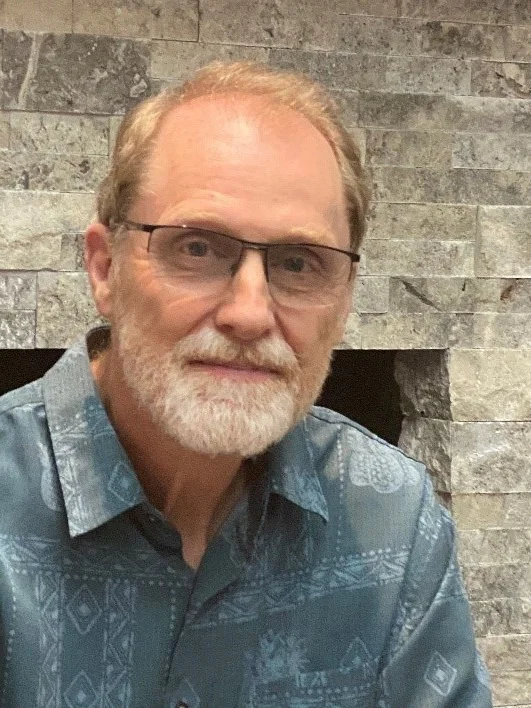
About Dr. Gary M. Jordan, Ph.D.
Gary Jordan, Ph.D., has over 35 years of experience in clinical psychology, behavioral assessment, individual development, and coaching. He earned his doctorate in Clinical Psychology from the California School of Professional Psychology – Berkeley. He is co-creator of Perceptual Style Theory, a revolutionary psychological assessment system that teaches people how to unleash their deepest potentials for success. He’s a partner at Vega Behavioral Consulting, Ltd., a consulting firm that specializes in helping people discover their true skills and talents.
Additional information about Dr. Gary Jordan