Personality vs. Perception: What’s the Difference?
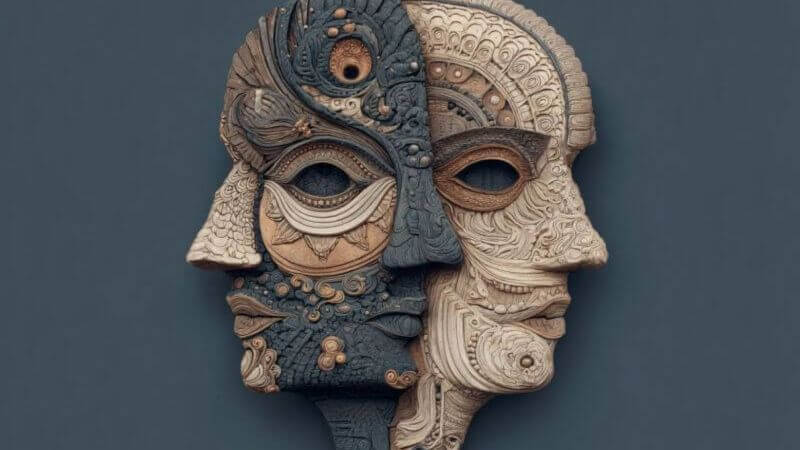

In the crowded world of self-discovery tools, you’ve likely come across personality tests — Myers-Briggs Type Indicator, Enneagram, Big Five personality traits, DISC assessment, and others. These frameworks offer insights into behavior patterns, motivations, and preferences.
But have you ever stopped to ask: What if how we see the world matters just as much as how we act in it?
That’s where Perceptual Style Theory™ (PST) offers a fresh and deeper layer of understanding. While often mistaken as “just another styles theory,” PST is something different. It doesn’t focus on behavior — it focuses on perception — the lens through which you interpret and make sense of your experiences.
In this article, we’ll unpack the key differences between personality and perception, and explore how Perceptual Style Theory adds a valuable, often-overlooked dimension to the self-understanding puzzle.
What Is Personality?
Personality refers to the characteristic patterns of thoughts, feelings, and behaviors that make a person unique. Most personality theories are trait-based, meaning they describe how individuals tend to behave across time and situations.
For example:
-
The Big Five describes traits like Openness or Conscientiousness
-
Myers-Briggs classifies people based on cognitive preferences like Thinking vs. Feeling
-
The Enneagram focuses on core fears and motivations
These models are helpful for understanding behavioral tendencies and emotional responses. They give us a language to talk about “who we are” based on what we do and how we react.
But behavior is only the surface. Underneath it is how we experience the world—what we notice, what we interpret as important, and how we construct meaning from experience.
That’s the domain of perception.
What Is Perception?
Perception is the process by which we gather, organize, and interpret sensory information. It’s not just about what your eyes see or your ears hear—perception is deeply tied to attention, meaning-making, and interpretation.
Two people can go through the same event and walk away with completely different takeaways—not because of their personality traits, but because of how they perceived the situation.
Perceptual Style Theory suggests that each of us has a consistent, natural way of perceiving the world. This “style” influences:
-
What information you naturally notice or filter out
-
How you interpret situations and people
-
How you communicate and make decisions
-
What types of environments feel comfortable or stressful
In other words, perception shapes the very data your personality reacts to.
Personality vs. Perception: Key Differences
While both personality models and Perceptual Style Theory offer valuable insight, they operate at different levels of understanding.
Personality Theories
|
Perception Style Theory
|
Where They Overlap—and Where PST Goes Deeper
There is some overlap, of course. For example, someone described as “introverted” in a personality model might also have a Perceptual Style that naturally tunes into internal thoughts or subtle cues in their environment.
But where personality might describe what that person does (prefers quiet, avoids crowds), PST helps explain why that feels natural—because of how they perceive stimuli and process experience.
This deeper layer matters because it’s more foundational. While behaviors can change depending on context or life stage, Perceptual Style remains consistent—it reflects how you’re naturally wired to process the world.
Why This Matters in Real Life
Let’s look at two people with similar outward personalities: both thoughtful, introverted, and detail-oriented. Personality models might place them in the same category.
But:
-
One may perceive the world with a focus on structure and precision, thriving on clarity and logic.
-
The other may perceive the world through relationships and emotions, tuning into harmony and interpersonal nuance.
Outwardly similar, but fundamentally different in what drives their decisions and what environments energize or drain them.
Understanding this distinction helps:
-
Leaders delegate in ways that align with how team members naturally process work.
-
Therapists and coaches tailor approaches to how clients experience and interpret situations.
-
Individuals develop self-compassion by recognizing the source of their needs and reactions.
The Unique Contribution of Perceptual Style
Perceptual Style doesn’t replace personality theory — it complements and deepens it.
By focusing on perception rather than behavior, PST invites us to stop asking, “What kind of person am I?” and start asking, “How do I naturally experience the world?”
That shift is powerful.
It moves us from labeling to understanding, from judging behavior to exploring context, and from self-improvement to self-alignment.
Final Thoughts
In a culture obsessed with personality tests, it’s easy to confuse what you do with who you are.
But perception is the bridge between experience and expression. It’s the core filter through which all behavior flows.
Most people spend years trying to change their behavior… without ever understanding the lens that drives it.
If you want to better understand yourself—or help others do the same—start not with traits, but with perception. Because once you see how you see, everything else begins to make sense.
And that awareness doesn’t just stay theoretical.
It changes how you communicate.
How you make decisions.
How you respond to others—and to yourself.
If this idea resonates, the next step isn’t to label yourself differently… it’s to explore your own perceptual lens more intentionally.
That’s exactly what the Perceptual Style Assessment is designed to do—help you see, with clarity, the natural way you experience the world and how that shapes everything else.
Please share your thoughts on this topic in the comment section below.
Find out more about the services we have available to help you find the success you want and deserve!
About Dr. Gary M. Jordan, Ph.D.
Gary Jordan, Ph.D., has over 35 years of experience in clinical psychology, behavioral assessment, individual development, and coaching. He earned his doctorate in Clinical Psychology from the California School of Professional Psychology – Berkeley. He is co-creator of Perceptual Style Theory, a revolutionary psychological assessment system that teaches people how to unleash their deepest potentials for success. He’s a partner at Vega Behavioral Consulting, Ltd., a consulting firm that specializes in helping people discover their true skills and talents.
Additional information about Dr. Gary Jordan