When Five Days of Winter Storm Felt Like a Pandemic Flashback
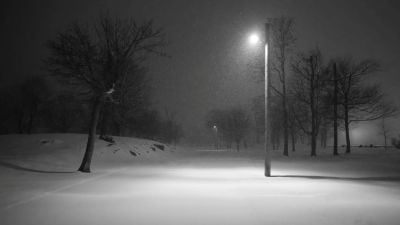

I wasn’t expecting the recent winter storm to take me back.
It wasn’t even snow this time. It was sleet, freezing rain, and temperatures hovering in the single digits. The kind of cold that feels extreme for north Texas and instantly stirs up memories of past power outages and bursting city water pipes.
Fortunately, there were several days of advance notice, allowing time to plan and prepare.
Interestingly, preparation also subtly shapes your mindset. You don’t plan for a normal week; you plan for disruption. You organize your days around the possibility of losing power or water, even if, thankfully, neither ultimately happened.
A Smaller, Slower World
Then the storm settled in. And with it came the silence.
No cars moving about the neighborhood. No hum of normal life. The world grew small in a way that felt both intimate and a bit unsettling. It wasn’t just that we were physically confined to our homes — it was that the rhythm of life changed. Time stretched. Even my attention shifted.
I found myself losing interest in the work I had planned. My mind drifted toward things I’d been keeping on the back burner, a book I’d been meaning to read, a closet I’d been meaning to organize. Activities that matched the slower pace created by the storm, ones that invited reflection rather than urgency.
I took more breaks to bundle up and go outside for a few minutes with our Irish Setter who was thrilled by the cold and slipped around on the frozen yard with glee.
Meanwhile, friends and family with school-aged kids were living a completely different reality. School closures, workplace closures, juggling remote work with bored children who couldn’t play outside because it was simply too cold.
One clear gift of the pandemic showed up here: remote work is now possible in ways it wasn’t before. That’s real progress. But anyone who has tried to work while simultaneously entertaining kids stuck at home knows possibility doesn’t always translate into reality. The storm didn’t just slow life; it complicated it.
A Familiar Emotional Landscape
By day two, I felt something familiar settle in — that peculiar blend of stillness, limitation, and inward focus we all came to know during the pandemic.
Only this time, it wasn’t a global crisis. It was just weather.
And yet, my body didn’t seem to care about that distinction.
That’s the thing about the pandemic — it wasn’t only a logistical event. It was emotional, psychological, and embodied. Our nervous systems adapted to a different pace of life. Even years later, certain situations can bring those memories flooding back, whether we expect them or not.
For me, the storm reopened a familiar emotional landscape. Feelings and insights I had learned about myself during the pandemic, but tucked away because they belonged to “back then.” The ice simply brought them forward again.
Same Storm, Different Inner Worlds
Five days of ice. One shared reality. And likely as many inner experiences as there were people living through it.
That’s exactly where Perceptual Style becomes so illuminating.
The storm was the same for all of us. Our perception of it was not.
It was about what happened under pressure.
-
Activity: Restlessness in Closed Space
People who are Activity likely felt the confinement almost immediately. You may have started strong — productive, busy, finding things to do — but as the hours stretched into days, that energy could dip into irritation or stir-crazy restlessness. The pandemic echo here is that familiar pivot from “I’ve got this” to “Okay… I need movement and people now.”
-
Vision: When Quiet Becomes Isolation
For Vision folks, the quiet may have felt expansive at first — a welcome pause, space to think, imagine, and reflect. But as the days wore on, that same stillness could easily slide into isolation, even a subtle thwarting of possibilities. With no movement, no broader horizon, and no visible path forward, the waiting itself could begin to feel heavy.
-
Goals: Frustration in the Freeze
With the Goals style, the storm likely landed as disruption. Plans canceled. Momentum stalled. The freezing rain became a reminder that control exists only when circumstances cooperate — and that a loss of forward momentum can feel deeply uncomfortable.
-
Methods: Order Under Pressure
For those who are Methods, structure is usually your anchor. If your routines held, you may have felt grounded despite the storm. But if meals, work, or schedules were disrupted, the days could feel genuinely unsettling — a small echo of the unpredictability that defined pandemic life.
-
Adjustments: Permission to Slow and the Cost of Delay
People who are Adjustments, the storm created an official slower pace that initially felt like a welcome break — some extra time to explore interests or projects that are often crowded out by daily demands. At the same time, that relief likely carried an edge of irritation, because you could already see ahead, aware that anything delayed now would later be compressed into a tighter timeline, with little control over how that pressure would unfold.
-
Flow: Connection Without a Path
Those who are Flow probably slipped naturally into the slower rhythm of the storm. You may have felt attuned to the mood of the snow and freezing rain, the beauty of the quiet, and the closeness of being home together. Yet beneath that, there may have been a subtle ache of disconnection — a sense of feeling cut off from your broader circle, with no clear path to reconnection while the winter storm held everything in place.
When Closed Quarters Expose Our Differences
Reading across these reactions, one thing is clear: the storm didn’t just slow life — it intensified our differences.
Closed quarters and stress have a way of amplifying Perceptual Style distinctions between the people we live with. The storm didn’t simply confine us to our homes; it placed our different ways of seeing, responding, and coping under a magnifying glass.
And in that heightened state, judgment can sneak in quickly.
-
Restlessness can look like impatience.
-
Quiet can look like withdrawal.
-
Frustration can feel like being demanding.
-
Sensitivity can come across as drama.
But notice something important here: most of the time, we’re judging someone else’s reaction — not our own. We assume our way of responding makes sense, while theirs feels excessive, unreasonable, or inconvenient.
In that sense, the storm became more than weather. It became a relational mirror — reflecting not only our inner landscapes, but how we interpret one another.
What the Storm Revealed
When the roads finally cleared, and life resumed its usual pace, I felt re-energized. The familiar rhythm of connection, movement, and possibility returned.
More than anything, the storm reminded me that our responses to interruption — whether it’s a global crisis or five days of winter storm — quietly reveal what we need, value, and notice about the world.
As you think about your own experience, you might consider:
-
How did you feel during those storm days — relieved, restless, anxious, peaceful?
-
What did that reaction suggest about what you need in your everyday life?
-
Did you feel more like yourself… or less? Why?
-
How did the people you live with respond — and where did those differences create tension or insight?
-
If your Perceptual Style could design its ideal “snow days,” what would they look like?
In the end, the storm wasn’t just weather. It was a collective pause — a brief return to a slower, smaller world that highlighted how differently we inhabit the same space.
And that’s where the real power lies: not in what happens to us, but in how we perceive it.
Because your perception doesn’t just shape your experience of a storm.
It shapes your experience of life.
See clearly, Move wisely,
Please share your thoughts on this topic in the comment section below.
Find out more about the services we have available to help you find the success you want and deserve!