The Wisdom of the Body: Lessons Learned from a Hospital Stay

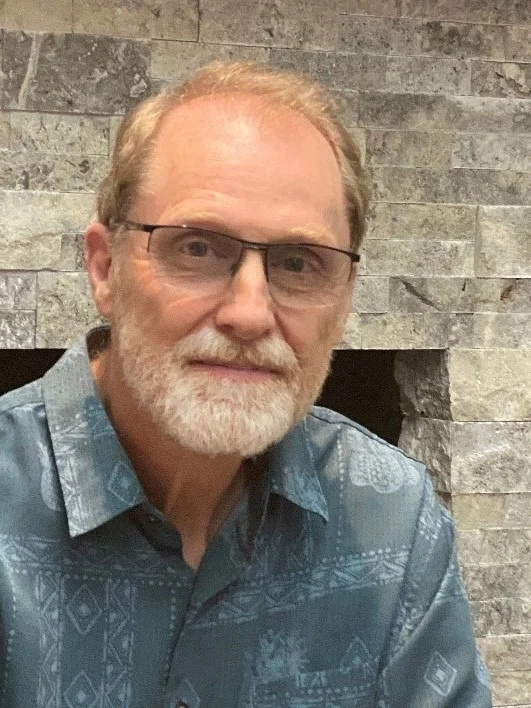
Co-creator of Perceptual Style Theory
Five weeks ago, I found myself in the hospital for a five-day stay brought on by acute diverticulitis. It had started two weeks earlier with periodic lower intestinal cramping. Eventually, I ended up in the emergency room with almost constant cramping after nothing had passed through my digestive system for 48 hours.
The experience gave me considerable time to reflect on what my body was teaching me as I approached 70 years of age. The lessons themselves were not new, but experiencing them physically brought them new meaning.
Lesson 1: You Are Not in Control
When we think about being in control, we often think about plans, organization, goals, or schedules. From a broader perspective, control involves our sense of agency: the belief that we can influence our thoughts and behavior and handle the challenges life presents.
But when you consider what happens at the physical level, you realize how little conscious control you have over many of your body's functions. Most of its systems operate without your attention or intervention. And when one of those systems stops working as it should, you quickly discover that determination alone cannot make it function normally again.
This may sound a little silly or obvious, but when the system isn’t working the way it is supposed to, plans, organization, goals, schedules, and even agency don't mean a whole lot.
Lesson 2: You Cannot Know What Will Happen
I think that this lesson is the cause of our need to believe we are in control!
Lying there in the hospital, I had faith that what was going on with my body would resolve, but I didn't know for sure. I didn't know how long a resolution would take, what that resolution would look like, whether my life was going to change, or how it might change.
Lesson 3: Learning to Surrender Is a Challenge
One of the things I often say to clients is that therapy is a process that helps you surrender to life as it is, rather than trying to make it into what you think it is or believe it should be.
“This isn’t supposed to be happening!” is not a helpful focus when your digestive system has shut down and you are in extreme pain. I know that at some level all we have is the here and now, but it all becomes about the here and now and getting through the next moment when your body is not working correctly!
Accepting where I was and allowing myself to focus on healing became an important part of my experience. The physical discomfort kept my attention firmly in the present, leaving little room to worry about the future. In those moments, getting through the immediate situation mattered far more than anything that might come next.
Lesson 4: Ego Makes the Lessons Harder to Learn
We all have an ego. It is the part of us that creates a story about who we are, both for ourselves and for the world around us. We then become invested in proving that this story is the truth, rather than recognizing it as one way of understanding ourselves.
It is all those things we tell ourselves to help us feel good about our lives: “I am important. I am in charge. I am successful. I am different. I am special. I know better than others what is going on, etc.”
Having an ego is important to our daily functioning in the world, but it is pretty much irrelevant when you are where I was. None of the things I use daily to support my sense of value meant much or served me in the condition I was in.
Lesson 5: I Am Mortal
The uncomfortable truth. We all know this, but in my experience, we try not to think about it too much. It was hard not to think about it the first several days of my hospital stay. It is a very different experience to think about your mortality from the comfort of your couch than from a hospital bed. It is a very different experience to think about your mortality at age 70 than it is at age 20.
I was released after five days, and after the inflammation had fully resolved two and a half weeks later, I had surgery to remove the offending section of my colon. My surgeon says that I won’t miss it and that the chances of recurrence are very low.
That’s good, but it doesn’t change the lessons learned nor diminish their importance. As the t-shirt message says: “I don’t mind getting older, but my body is not too happy about it.”
My hospitalization was more than a medical event. It was a reminder that control has limits, uncertainty is unavoidable, and surrendering to what is happening can be far more difficult than understanding the idea intellectually. It also reminded me how easily ego loses its importance when our physical well-being is threatened. I came away with a renewed awareness of my own mortality and a deeper appreciation for the life I have. Aging may not always be easy, but it continues to offer opportunities for reflection, humility, and growth.
Please share your thoughts on this topic in the comment section below.
Find out more about the services we have available to help you find the success you want and deserve!
© Vega Behavioral Consulting, Ltd., All Rights Reserved
About Dr. Gary M. Jordan, Ph.D.
Gary Jordan, Ph.D., has over 35 years of experience in clinical psychology, behavioral assessment, individual development, and coaching. He earned his doctorate in Clinical Psychology from the California School of Professional Psychology – Berkeley. He is co-creator of Perceptual Style Theory, a revolutionary psychological assessment system that teaches people how to unleash their deepest potentials for success. He’s a partner at Vega Behavioral Consulting, Ltd., a consulting firm that specializes in helping people discover their true skills and talents.
Additional information about Dr. Jordan